
Compare Blackford County Property Value Types
No single figure answers every property question in Blackford County. Indiana's assessment standard, a recorded conveyance, and a private appraisal each measure something different, and their effective dates can sit far apart.
| Value type | Meaning in the record | Where it is found |
|---|---|---|
| Land assessed value | Value assigned to the land component | Assessor parcel card |
| Improvement assessed value | Value assigned to buildings and improvements | Assessor parcel card |
| Total assessed value | Land and improvement components combined under Indiana's standard | Assessment record |
| Market value-in-use | Indiana's assessment standard based on property use | DLGF guidance and assessment work |
| Sale or consideration figure | Transaction information that may have special terms | Sales disclosure or recorded instrument where shown |
| Private appraisal | An opinion prepared for a stated purpose and date | Outside the ordinary public tax roll |
Label, date, and keep each Blackford County figure separate. A transfer amount may reflect an estate or several parcels, while trending or reassessment can shift an assessment from one year to the next.
Find a Blackford County Property Value by Parcel
The ProperlyTaxes search accepts Parcel Number, Owner Name, Street Number, Street Name, City, and Zip. The guidance suggests one field at a time. Parcel number works fastest. Beacon supplies the county-linked parcel card and map context for Blackford County.
- Search the parcel number first. If it is unavailable, try a street name or owner surname without filling several fields.
- Verify the property address, parcel key, and assessment year before copying a value.
- Record land, improvement, and total components separately, along with any deduction shown.
- Check transfer history and sales-disclosure evidence only as separate dated layers.
- Preserve the search date and ask the Assessor about a missing year, physical trait, or recent change.
- Assessed value
- The value assigned under Indiana's property-assessment system.
- Market value-in-use
- The state standard based on how property is used, not a promised price.
- Assessment ratio
- Assessed value divided by sale price in DLGF's ratio-study explanation.
- Sale consideration
- A transaction figure whose terms and parcel coverage need review.
- Reassessment
- A review of characteristics and value within the statewide cycle.
The source capture below shows the Blackford search route used to begin the lookup.
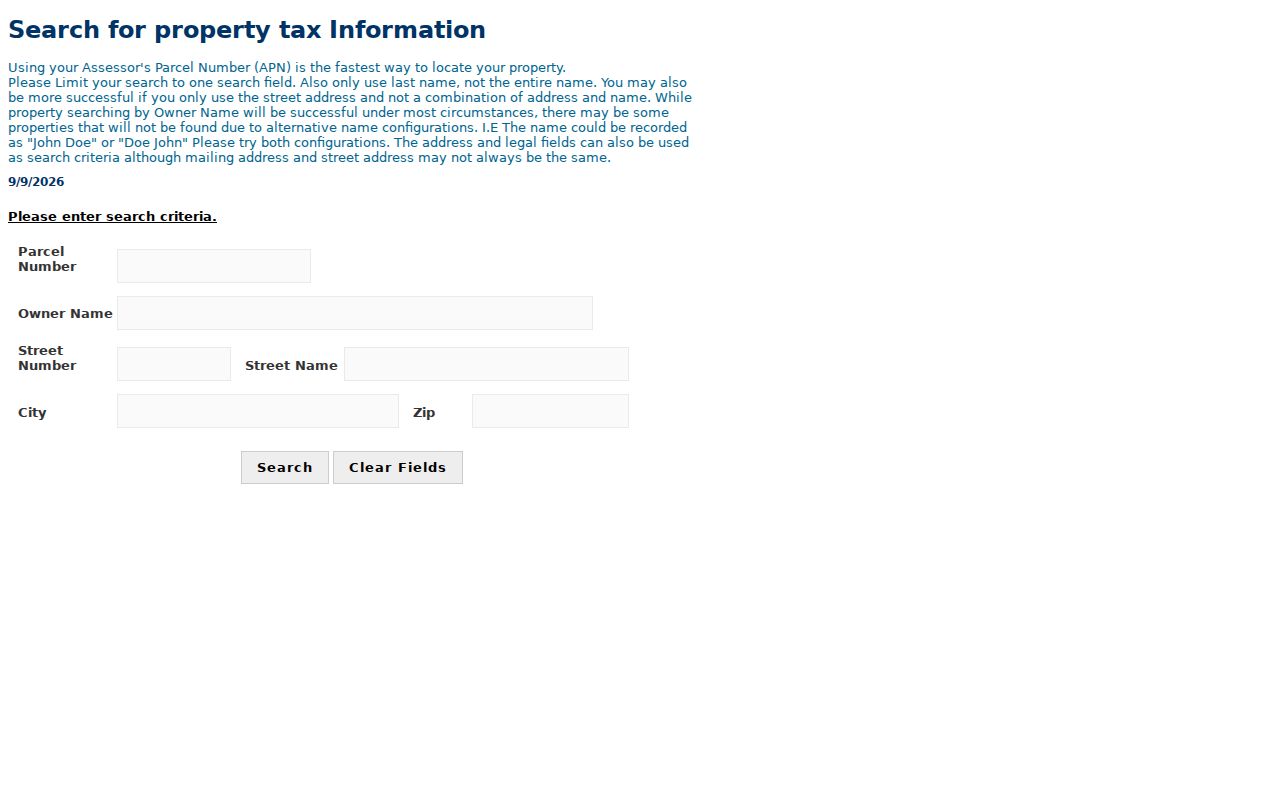
This image shows the search screen itself, not a filled-in parcel card. Open the matching result and note its year rather than reading fields from the picture.
Indiana's 100 Percent Rule Guides Blackford County Value
The Indiana Department of Local Government Finance sets the standard: real property is assessed at 100 percent of market value-in-use. That's the anchor for any Blackford County property value. Annual adjustment, called trending, has applied since 2002. It draws on prior-year sales. The ratio is assessed value divided by sale price. The DLGF page lays out this method for interpreting local figures.
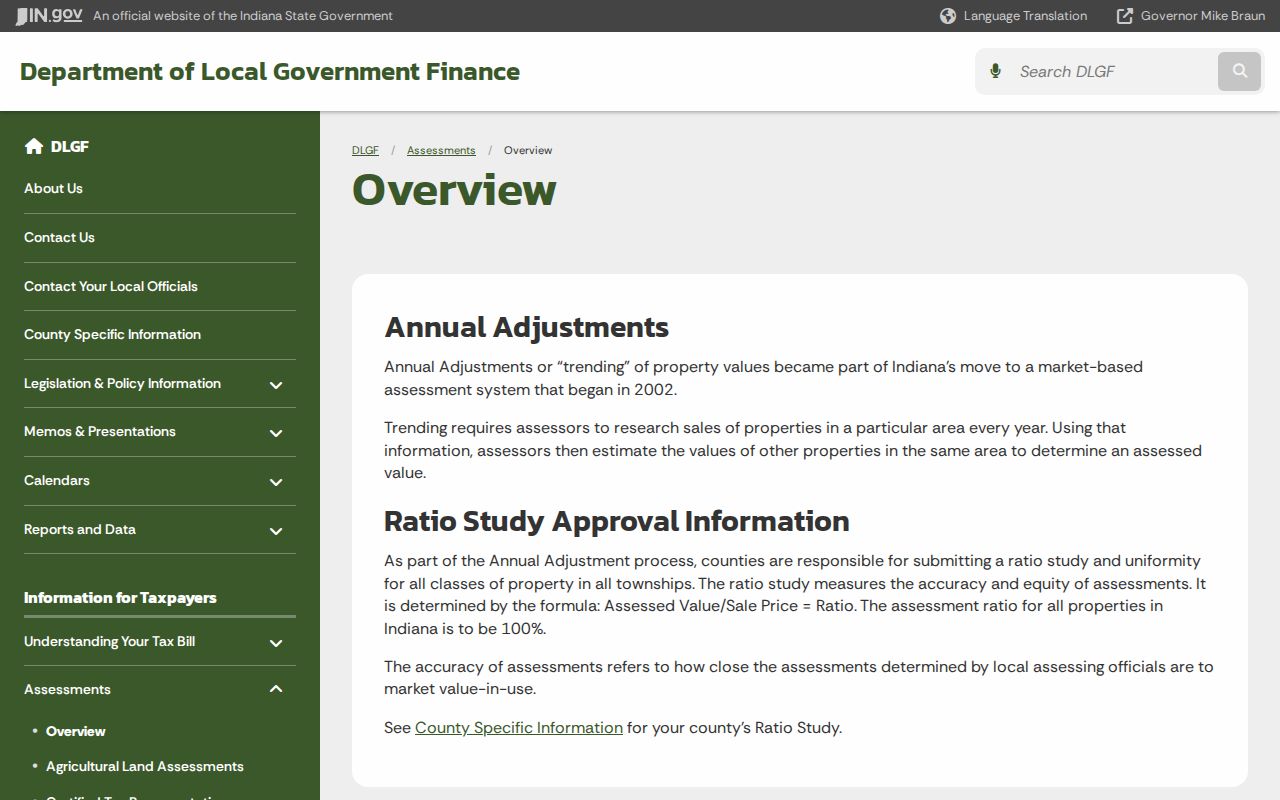
The 100 percent standard does not force every assessment to equal a recent contract price. It describes the level of assessment. Each Blackford County parcel keeps its own characteristics, evidence, and assessment year.
Land and Improvements Build Blackford County Assessed Value
Record land, improvement, and total components instead of copying only the largest figure. Changes come from many places. A shift may trace to land classification, new or removed improvements, corrected area, condition, neighborhood factors, or annual adjustment on Blackford County parcels.
| Comparison item | Question to ask | Record to keep |
|---|---|---|
| Land | Did acreage, classification, or land characteristics change? | Current and prior cards |
| Improvements | Did a structure, area, grade, or condition entry change? | Property record and permit |
| Total | Which component explains the movement? | Dated yearly totals |
| Deduction | Does it change net rather than gross value? | Auditor record |
Gross assessed value minus deductions gives the net assessed value used for taxes. Bill calculations and appeal mechanics live on the Blackford County property tax page.
Sales Disclosure Adds a Blackford County Value Layer
DLGF sales-disclosure information is publicly searchable for transactions after July 1, 2008. Form 46021 and its addenda support trending. The form's verification fields are extensive: parcel number, land and improvement values, total value, class, neighborhood code, tax district, acreage, dates, and physical changes. Public access guidance sits on the same DLGF page.
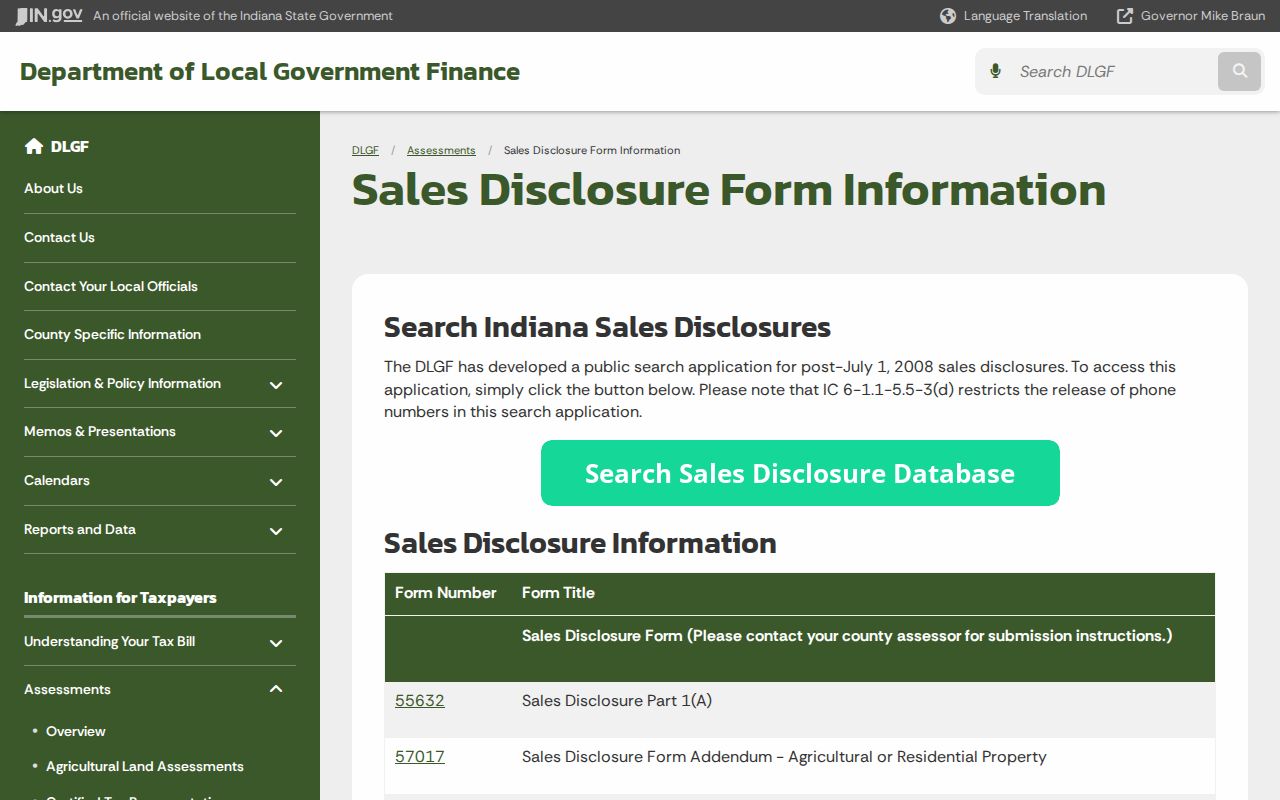
Not every transfer works for trending. A deed may bundle several parcels or carry non-market terms, so compare the disclosure against the deed and parcel record before calling a figure a conventional Blackford County sale price.
Note: A consideration figure needs its transaction date and terms; it should never silently replace the parcel's assessed value.
The 2026 Cycle Changes Blackford County Value Comparisons
The statewide cyclical reassessment begins a four-year rotation in 2026. DLGF describes roughly 25 percent of parcels reassessed each year, with physical inspection. The timing details differ between sources. The web page gives July 1, 2026. That date governs the 2026 pay-2027 year. A 2025 fact sheet differs. It starts the first group May 1, 2026. It finishes January 1, 2027. Keep that version difference in view. Compare Blackford County parcels through their actual assessment years. Two nearby properties may sit at different inspection stages. A countywide trend cannot explain either tract's characteristics.
County Medians Are Not Blackford Parcel Appraisals
Census QuickFacts puts the 2020 to 2024 median owner-occupied value at $107,500 for Blackford County. Hartford City comes in at $83,400. Those numbers describe broad residential context. They are not an assessed value for one address. Nor do they predict a probable sale price. Use a county or city statistic only for the place and period it covers; parcel work still needs the parcel card, its year, land and improvement components, sales evidence, physical characteristics, and transfer context.
Ask the Blackford County Assessor About a Stale Value
Property owners who suspect a stale value should start with the Blackford County Assessor, located at 110 W Washington Street in Hartford City. The office answers questions by phone at 765-348-1707 during weekday hours of 8:00 a.m. to 4:00 p.m. The assessor publishes no fixed deed-to-roll lag or parcel-card refresh schedule. Because of that gap, asking directly is often the fastest way to learn when a parcel record last changed. Have the parcel number and the assessment year you care about ready before you call. Request the current parcel card, the value history, any roll-update notation, and the source behind a land or improvement change; a focused parcel-number inquiry gets cleaner answers than a broad search by owner of record.
Note: A newly recorded deed may predate the next assessor update, so value and ownership fields can carry different dates.
What Blackford County Property Value Cannot Predict
An assessment serves Indiana's tax system. A deed shows a recorded instrument. A sales disclosure reports the transaction. None of them alone predicts current condition, title quality, repair cost, easement impact, or the price a Blackford County buyer and seller would accept today.
Value is not price. Blackford County assessed value is not a sale appraisal or guaranteed offer. For a current opinion prepared for a transaction, use a qualified licensed appraiser.
Every number in an assessment carries an effective date and a purpose. Keep both facts attached to any figure you use. A material decision deserves more than one number. Weigh the public record against current condition. Weigh it against recorded instruments. Weigh it against an appraisal suited to the specific use. A sound Blackford County property value comparison also controls for parcel identity. Match the parcel number first. Then match the situs address, legal description, land area, property class, and assessment year. Only then place two records side by side.
Addresses can mislead. Similar street addresses may carry different improvements, deductions, tax districts, transfer histories, or inspection dates. Neighboring lots may too. Any of those differences can explain a gap without proving either assessment wrong. When researching a past sale, note the conveyance date. Note the receipt date, parcels included, physical changes, and any sign the sale was excluded from trending. Then compare the disclosure with the recorded deed and the assessor transfer entry. A nominal-consideration deed, family transfer, estate conveyance, correction, or corporate transfer is not the same as an open-market sale. Do not treat it like one without evidence supporting that description.
If a characteristic looks wrong, document the exact field rather than starting from a desired total. The current parcel card and an earlier card both help. So do photographs, measured area, permits, and sales evidence. Together they build a clearer record of the issue. The Assessor can explain the roll entry. DLGF forms, in turn, separate factual defects from subjective value disputes. The notice and current year control any formal review timeline.
Keep the final value worksheet with its source dates, parcel key, and assessment year. That simple record makes later changes easier to explain. It also prevents an old public figure from being presented as current.